

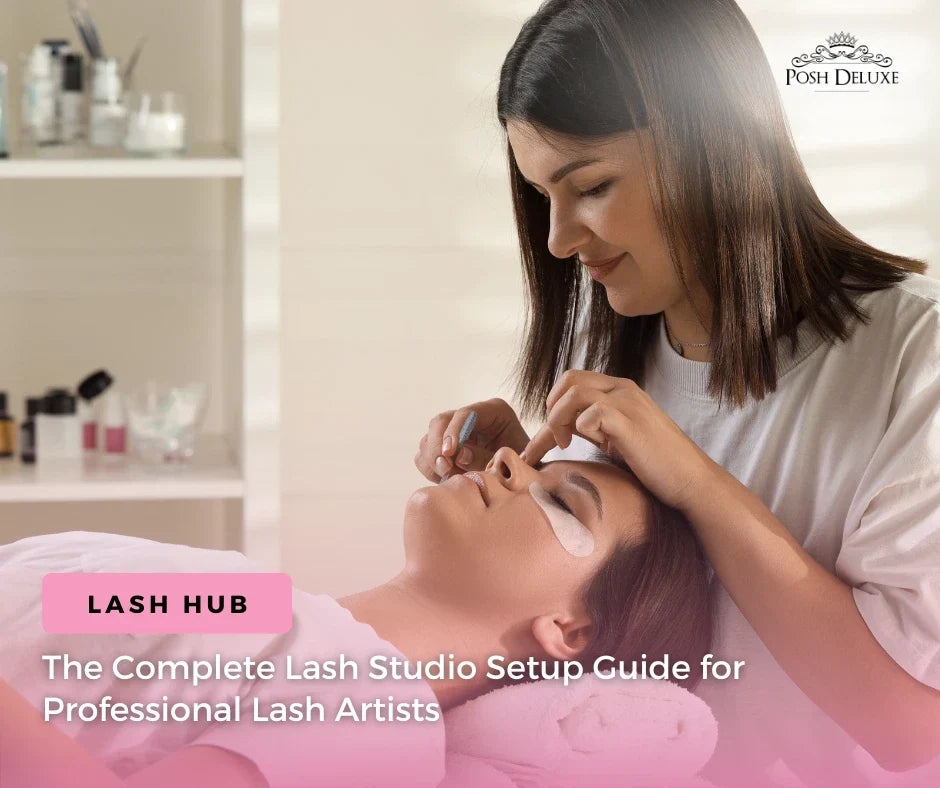
Most new lash artists build their kit before they build their room. They spend hours comparing tweezers, lash trays and adhesives, researching which products suit their working conditions — and then find themselves setting up on a borrowed chair under a basic desk lamp.
Your consumables kit — lashes, adhesive, tweezers and prep products — is only part of the equation. The other part is the physical space where you work: the bed your client lies on, the stool you sit on for hours, the lighting that helps you see your work clearly, and the environment in which your products need to perform.
A well-planned studio doesn't need to be extravagant. It needs to be comfortable, practical, organised and suited to the work you actually do.
This guide covers the furniture, lighting, storage and environmental considerations that go into creating a professional lash studio, whether you're working from home, renting a room or building a larger salon.
Looking for the consumables and hand-tool side instead?
See our Ultimate Professional Lash Kit Guide for lashes, adhesive, tweezers and other essential products.
The Core Lash Studio Setup Checklist
Every working lash studio — whether home-based, mobile, rented or part of a commercial salon — should consider these fundamentals:
- A suitable lash bed
- An adjustable, ergonomic stool
- Primary task lighting
- Comfortable ambient room lighting
- A hygrometer or thermo-hygrometer
- Appropriate temperature and humidity control
- Storage and organisation for products and tools
- A mirror for the client reveal
- Clean bedding and linen
- A practical trolley or workstation
- A comfortable environment for both artist and client
You don't necessarily need everything on day one. Prioritise the equipment that affects your working position, visibility, client comfort and product conditions first.
The Lash Bed: One of Your Most Important Furniture Purchases
Your client may spend anywhere from 90 minutes to several hours on your lash bed, depending on the service. A suitable bed can make a significant difference to the overall client experience and give you a stable working position.
What to Look For in a Lash Bed
A flat or suitable working position. For lash extensions, you need your client's head and face positioned consistently so you can work comfortably around the eye area. Look for a bed that provides an appropriate position for lash application rather than choosing purely based on appearance.
Adjustable height. Your working height matters just as much as your client's comfort. An adjustable bed allows you to position the client at a height that works with your stool and your preferred working posture.
A suitable headrest. Some beauty and massage beds include a horseshoe-style headrest or other head support. Choose an option that keeps the client's head comfortable and provides enough room for you to work around the face.
Stability and weight capacity. Check the manufacturer's weight rating and make sure the bed feels stable when in use. Movement or instability can be distracting during detailed lash work.
Portability, if you're mobile. Mobile lash artists may prefer a folding beauty or massage-style bed that can be transported easily. Weight matters, but don't sacrifice stability and a suitable working position simply to save a few kilograms.
How Much Should You Spend?
Your budget will depend on the type of business you're building.
Entry-level beds can provide a practical starting point, while more advanced electric beds offer additional adjustment and comfort for established studios. Rather than choosing a bed based purely on price, consider stability, adjustability, comfort, upholstery quality and how often you'll use it.
Your Lash Artist Stool: Don't Overlook Your Own Comfort
Lash artists can spend hours seated in a relatively small working area, often leaning forward and making precise movements.
That makes your stool one of the pieces of equipment worth taking seriously.
What to Look For
An ergonomic seat. Saddle-style stools are popular among beauty professionals because their shape can encourage a more open hip position. However, comfort and fit are individual, so the best stool is one that allows you to maintain a comfortable working position.
Adjustable height. Being able to adjust your stool to suit the bed height and each client's position gives you greater flexibility throughout the day.
Smooth-rolling casters. A lash artist may need to move slightly from one side of the bed to another during an appointment. Good-quality casters make those small movements easier.
Back support, if preferred. Some artists prefer a backless saddle stool, while others feel more comfortable with a supportive backrest. Consider your own working style rather than assuming one design suits everyone.
Don't Choose Your Stool as an Afterthought
It's tempting to spend most of the setup budget on the bed and lighting and use whatever chair is already available.
If you're planning to lash several days a week, however, your stool deserves proper consideration. Your comfort and working position are part of your equipment setup too.
Lighting: Primary, Ambient and Task Lighting
Good lighting is essential for detailed lash work.
Your lighting needs to serve two different purposes: helping you see your work clearly and creating a comfortable environment for your client.
Primary Task Lighting
A dedicated LED task lamp can provide concentrated illumination around the client's face and eye area.
Many lash artists prefer daylight-style lighting because it can provide clear visibility and make it easier to distinguish lash colours and details.
Rather than focusing only on colour temperature, pay attention to the lamp's brightness, positioning, adjustability and ability to minimise shadows.
Position the light so that it illuminates the working area without creating uncomfortable glare for your client.
Ambient Room Lighting
Your main room lighting serves a different purpose.
Softer ambient lighting can make the studio feel more comfortable and welcoming, particularly when clients are spending several hours lying still.
The goal isn't to make the entire room as bright as your task light. Instead, create enough general illumination to move around the studio safely while allowing your primary task light to do the detailed work.
Lighting for Your Product Station
A secondary light near your lash tray or product station can also be useful.
When you're selecting different lengths, curls and diameters, you want enough visibility to identify the products without relying on dim room lighting.
Climate and Your Lash Adhesive
Your studio environment matters because lash adhesive performance is affected by temperature and humidity.
The first step isn't buying a dehumidifier or humidifier. It's knowing what conditions you're actually working in.
Start With a Hygrometer
A digital hygrometer or thermo-hygrometer allows you to monitor the temperature and relative humidity inside your studio.
This is particularly useful because indoor conditions can differ considerably from what the weather feels like outside. Air conditioning, heating, ventilation and the room itself can all influence your working environment.
Your adhesive manufacturer's recommended working conditions should be your starting point when assessing whether your studio environment is suitable.
Do You Need a Dehumidifier?
Not every lash studio needs a dedicated dehumidifier.
If your indoor humidity is regularly outside the recommended range for the adhesive you're using, however, a dehumidifier may help you manage the environment.
Rather than buying one simply because you live in a humid region, measure first and adjust based on your actual studio conditions.
What About a Humidifier?
The same principle applies in very dry environments.
If your studio regularly becomes too dry for the adhesive you're using, a humidifier may help bring conditions closer to the manufacturer's recommended range.
The important thing is to avoid guessing. Measure your environment, understand your adhesive's requirements and make adjustments accordingly.
Keep Client Comfort in Mind Too
Environmental control isn't only about adhesive.
A client lying still for two or three hours needs to be comfortable. Consider the room temperature, ventilation and airflow so the space feels pleasant throughout the appointment.
For matching your adhesive to your studio conditions, see our Adhesive Buying Guide.
Storage and Organisation
A professional lash studio can quickly accumulate dozens of small products and tools.
Without a system, lash trays, tweezers, adhesive and disposables can easily become difficult to find.
Good organisation helps you work more efficiently and keeps your workspace easier to maintain.
Useful Storage Options
Lash tray organiser or case. Keep different curls, diameters and lengths organised so you can quickly find what you need during an appointment.
Trolley or workstation. A beauty trolley with drawers can keep frequently used products within reach without overcrowding your main working area.
Appropriate adhesive storage. Follow the adhesive manufacturer's storage instructions and keep products away from conditions that may affect their performance or shelf life.
Clean and used tool separation. Have a clearly defined system for separating clean tools from tools that have already been used. Your exact cleaning and disinfection process should follow applicable hygiene requirements and product/manufacturer instructions.
Creating a Comfortable Client Experience
A professional studio isn't only about technical equipment.
Small details can influence how comfortable clients feel and how they remember their appointment.
Consider including:
- A mirror for the final lash reveal
- Fresh, clean bedding for every client
- A comfortable pillow or head support
- A blanket if your studio tends to feel cool
- A small side table or shelf for a client's phone, glasses or personal belongings
- Comfortable background music or white noise, where appropriate
- A clean, uncluttered workspace
These details don't need to be expensive. Consistency and cleanliness often make a bigger impression than elaborate décor.
Lash Studio Setup Budget: Where Should You Spend?
There isn't one correct amount to spend when setting up a lash studio.
Your budget should reflect whether you're starting part-time from home, working as a mobile artist or building a commercial space

These figures are general planning ranges rather than fixed market prices. Furniture and equipment costs vary significantly by brand, quality, features and supplier.
The most important point is to prioritise the equipment that affects your daily work rather than spending heavily on decorative items before the fundamentals are in place.
Common Lash Studio Setup Mistakes
Buying Furniture Before Measuring the Room. A lash bed takes up more space than its dimensions suggest once you account for your stool, trolley and movement around the client. Measure your room first — particularly if you're working from a smaller home studio.
Skipping the Hygrometer. Don't assume your indoor humidity based on the weather outside. Your studio may have very different conditions because of air conditioning, heating, ventilation and the building itself. Measure your actual environment rather than guessing.
Under-Investing in Your Stool. Your chair is something you interact with throughout every appointment. Don't automatically choose the cheapest option simply because it's less visible to clients. A suitable, adjustable stool can make your working environment much more comfortable.
Relying on One Light. A single overhead room light may not provide the visibility needed for detailed lash work. Use dedicated task lighting alongside appropriate general room lighting.
Focusing Only on the Artist. Your studio needs to work for you, but it also needs to be comfortable for the person lying on the bed for several hours. Think about temperature, bedding, head support, lighting, noise and the overall environment.
Frequently Asked Questions
What's the minimum equipment I need to start a home lash studio?
At a minimum, you'll want a suitable lash bed, a comfortable adjustable stool, dedicated task lighting and a way to monitor your studio's temperature and humidity. Other equipment can be added as your business grows.
Do I need a dehumidifier if I'm not in a humid state?
Not necessarily. The better approach is to monitor your studio's actual humidity and compare it with the working conditions recommended for the adhesive you're using. If your environment regularly falls outside those conditions, environmental control equipment may be useful.
What kind of lash bed do mobile artists use?
Mobile lash artists commonly choose folding beauty or massage-style beds that can be transported between locations. Look for a model that provides a stable, suitable working position and is practical for your vehicle and the type of appointments you offer.
Is a saddle stool worth the extra cost?
It can be, particularly if you're lashing several days a week. However, ergonomic preferences vary between artists. Look for a stool that allows you to adjust your height and maintain a comfortable working position rather than choosing a particular style simply because it's popular.
How do I know if my studio lighting is good enough?
Your task light should allow you to clearly see the lash line and individual lashes without excessive shadows or glare. If you're constantly adjusting your position to see your work, struggling to distinguish details or experiencing eye discomfort, your lighting setup may need improvement.
Should I buy new or secondhand studio furniture?
Secondhand furniture can be a practical way to reduce setup costs, particularly for storage. For a used lash bed, inspect the frame, adjustment mechanisms, upholstery, stability and manufacturer's weight rating carefully before purchasing. If the bed isn't stable or operates unpredictably, the saving may not be worth the risk.
The Bottom Line
Your consumables kit gets most of the attention when you're starting a lash business, but your studio environment matters just as much.
A suitable bed gives your client a comfortable place to lie. An adjustable stool helps you create a better working position. Proper task lighting gives you the visibility needed for detailed work. A hygrometer helps you understand your studio conditions, while appropriate environmental control can help you work within your adhesive manufacturer's recommended range.
You don't need to build the most expensive studio from day one.
Build a space that works well, supports your workflow and gives both you and your clients a comfortable, professional experience.
Once the foundations are right, you can upgrade your furniture, lighting, storage and décor as your business grows.
For the product side of your lash business, browse the Posh Deluxe range of professional lash supplies, including lashes, adhesives, tweezers and aftercare products. You can also explore our Ultimate Professional Lash Kit Guide for a complete breakdown of the tools and consumables you may need.


