

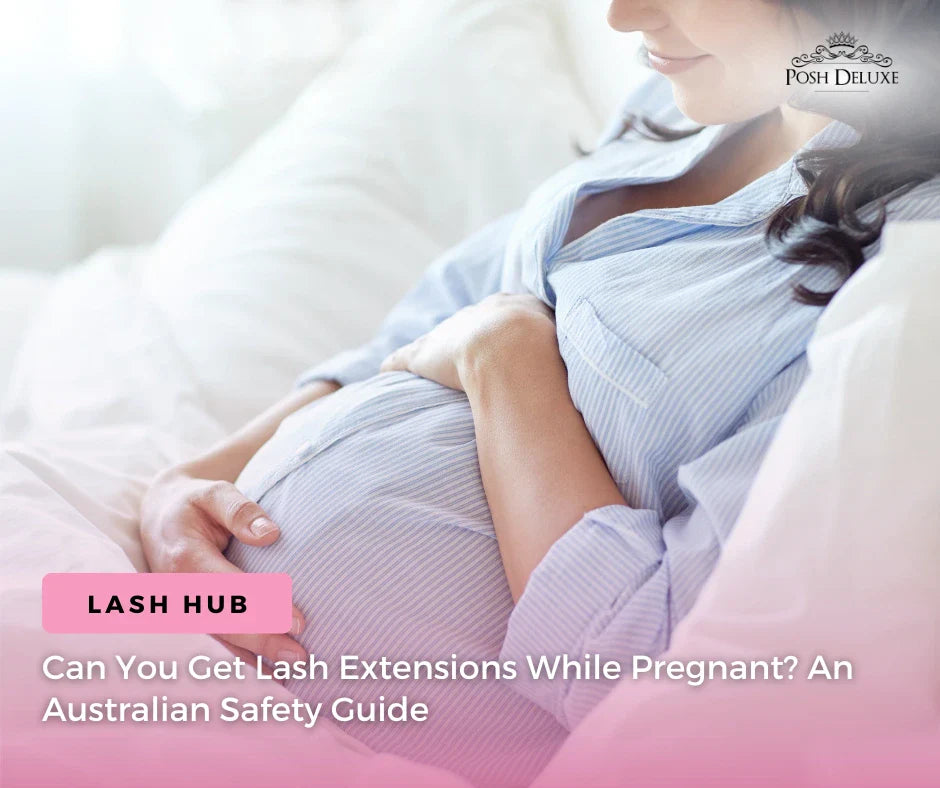
Important: this article provides general information from a professional lash artist perspective. It is not medical advice. Every pregnancy is different — always discuss cosmetic and beauty treatments with your GP, midwife or obstetrician before booking. If you have any pregnancy complications or concerns, defer to your medical team's advice.
"Can I get lash extensions while pregnant?" is one of the most-asked questions in Australian lash studios — and one of the most poorly answered on the internet. Some sources say yes without qualification. Others say absolutely no. Neither is complete.
For many healthy pregnancies, lash extensions can still be an option. However, pregnancy changes your body in many ways, so it's important to discuss any beauty treatment with your GP, midwife or obstetrician before booking. The honest answer is yes—many pregnant women continue wearing lash extensions throughout pregnancy—but there are four important considerations every client and lash artist should understand first.
This guide covers exactly what changes during pregnancy that affects lash extensions, trimester-by-trimester considerations, what to talk to your lash artist about, when to skip a set entirely, postpartum guidance for returning to lashes, and what lash artists should do differently for pregnant clients.
The Short Answer
Lash extensions are generally considered safe during most of pregnancy for most women. There is currently no evidence to suggest that properly applied lash adhesive is absorbed into the bloodstream in amounts that would affect pregnancy, the bond is formed on the surface of the natural lash hair, not the skin, and cyanoacrylate cures within seconds of application.
The four specific considerations that change during pregnancy are:
- Hormonal shifts can change your sensitivity to smells and chemicals — including adhesive fumes.
- Allergy risk changes as your immune system operates differently during pregnancy.
- Skin sensitivity often increases, especially in the eye and face area.
- Positioning becomes progressively harder, particularly in the third trimester when lying flat for hours isn't comfortable or medically ideal.
Understanding these four factors is what separates a safe, comfortable lash appointment during pregnancy from an unpleasant or risky one.
Should You Ask Your Doctor First?
Although lash extensions are considered a cosmetic treatment, pregnancy is unique for every person. If you have any pregnancy complications, a history of allergies, or concerns about lying comfortably during a long appointment, it's always worth checking with your GP, midwife, or obstetrician before booking.
What Pregnancy Actually Changes
1. Hormonal shifts and smell sensitivity
Pregnancy dramatically alters your sense of smell. Adhesive fumes that were previously unnoticeable can become overwhelming — sometimes triggering nausea or headaches. This is entirely normal and usually most intense in the first trimester. Choosing a well-ventilated studio and a low-fume adhesive dramatically reduces the impact.
2. Immune system changes and allergy risk
Your immune system operates differently during pregnancy. Some women develop new sensitivities they didn't have before — including to products they've used comfortably for years. Even if you've had lash extensions many times without issue, pregnancy can trigger a first-time reaction. This is uncommon but real, and it's the single biggest reason patch testing matters during pregnancy.
Read our full guide on lash extension allergies — symptoms, causes and what to do for the complete picture on reactions.
3. Skin sensitivity increases
Pregnancy hormones can make your skin more reactive — thinner, more prone to redness, and more sensitive to touch and pressure. The eye area is particularly vulnerable. Products, adhesives, and even the eye pads that felt fine before pregnancy can suddenly irritate.
4. Positioning becomes harder
Lash appointments require you to lie flat on your back for 1.5 to 3.5 hours. In the third trimester, lying flat for extended periods becomes increasingly uncomfortable — and after around 20 weeks, most obstetricians recommend against lying completely flat on your back because of pressure on the vena cava (the major vein returning blood to the heart). This is a genuine physical constraint, not just discomfort.
Trimester by Trimester Guidance
First trimester (weeks 0–13)
The most sensitive stage. Morning sickness and heightened sensitivity to smells mean adhesive fumes can trigger nausea. Many lash artists recommend waiting until after the first trimester before applying new full sets, especially for actively unwell women. If you already had extensions before falling pregnant, infills are generally fine — just plan around morning sickness timing.
Second Trimester (Weeks 14–27)
The second trimester is generally considered the safest and most comfortable time for lash appointments. Morning sickness has usually eased, smell sensitivity has settled, and most people can still lie comfortably for the duration of the appointment.
This is also the ideal time if you're planning lashes for a special event, maternity photos, or your baby shower, as longer appointments are usually much more comfortable during this stage of pregnancy.
Third Trimester (Weeks 28–40)
During the third trimester, comfort and positioning become much more important. As your baby grows, lying flat on your back for long periods may become uncomfortable. In some cases, the weight of the uterus can put pressure on major blood vessels, which may reduce blood flow back to your heart and leave you feeling dizzy, light-headed, or nauseous.
For this reason, you should be comfortable lying slightly on your side while keeping your head facing straight so your lash artist can work safely and accurately. This side-tilted position is generally more comfortable for you and helps reduce pressure from the baby on those major blood vessels.
To make appointments more comfortable, we recommend:
- Infills rather than full sets, as they require less time.
- A slightly elevated or reclined bed (around 15–30 degrees).
- Wedge pillows or cushions to support your back and hips while allowing you to rest slightly on your side with your head kept straight.
Many clients also choose to avoid appointments during the final four weeks before their due date, as sitting or lying still for extended periods often becomes more uncomfortable.
If you have a wedding, baby shower, maternity photos, or another special event before your baby arrives, we recommend booking your appointment around 4–6 weeks before your due date, rather than leaving it until the very end of your pregnancy.
Postpartum (after birth)
Wait 4–6 weeks after birth before your first lash appointment. There are two reasons:
- Postpartum hair shedding (telogen effluvium) affects the natural lash cycle. Many women experience noticeable lash shedding 2–4 months after birth, which will reduce lash extension retention regardless of application quality.
- Physical recovery matters. Give your body time to heal — especially after a caesarean, where positioning can be uncomfortable.
Consider classic extensions rather than volume for the first 2–3 postpartum sets — the lighter weight is more forgiving on natural lashes going through the shedding phase.
The Adhesive Question — What the Science Actually Says
Cyanoacrylate is the bonding chemical in lash adhesive. It cures within 1–3 seconds of contact with airborne moisture, forming a hard polymer bond on the surface of the natural lash hair. It is not absorbed through the skin. It does not enter the bloodstream. It cures on the surface of the natural lash and is not intended to come into contact with the skin.
The actual pregnancy consideration with adhesive is the fumes — very small amounts of formaldehyde and other compounds released during the curing process. In a well-ventilated studio with a professional-grade adhesive, exposure is minimal. In a poorly ventilated home studio using cheap adhesive, exposure can be enough to trigger nausea or irritation in a sensitised pregnant client.
Low-fume adhesive options: Bond Babe Adhesive from the Posh Deluxe range is formulated with lower fume release than standard pro adhesives — a good choice for pregnant clients or artists working in tighter studio spaces.
What to Tell Your Lash Artist Before Booking
Every pregnant client should share the following with their lash artist before the appointment:
- How many weeks pregnant you are.
- Any pregnancy complications (high blood pressure, preeclampsia risk, gestational diabetes, placenta previa).
- Any new sensitivities or allergies you've developed.
- Whether you've had lash extensions before pregnancy and how you tolerated them.
- Any body's positioning preferences or constraints.
- Whether you're comfortable lying flat, or would prefer a reclined position.
- Your medical team's guidance if they've given any.
A professional lash artist will thank you for the information and adjust the appointment accordingly. If a lash artist dismisses your concerns or refuses to accommodate positioning changes, choose someone else.
What to Avoid Completely During Pregnancy
Lash extensions themselves are generally safe. Some adjacent beauty treatments are not — the chemistry involved is different from lash extension adhesive.
- Lash lifts — use perm-solution chemistry that some sources recommend avoiding during pregnancy. Discuss with your GP.
- Lash tinting — some tints contain PPD (paraphenylenediamine) and other chemicals that can be absorbed through the skin. Many professionals recommend discussing these treatments with your healthcare provider first.
- Brow lamination and brow tinting — same chemistry considerations as lash lifting and lash tinting.
- Extended appointments in one position after week 20 — position matters more than the products used.
- Any beauty treatment your GP or midwife has specifically asked you to avoid.
Five Red Flags — When to Skip a Set Entirely
Some pregnancy scenarios mean a lash appointment should be postponed rather than adjusted. If any of these apply to you, wait until after birth:
- Any active pregnancy complication (preeclampsia, gestational diabetes, placenta previa, cholestasis, or anything your medical team is actively managing).
- Extreme all-day nausea or hyperemesis gravidarum — any additional smell or discomfort during a long appointment is not worth it.
- You're on bed rest or have been advised to minimise physical exertion.
- Newly developed skin sensitivity or eczema in the eye area that wasn't there pre-pregnancy.
- You're within 2–3 weeks of your due date, when positioning risk is highest and the appointment isn't essential.
For Lash Artists — Working with Pregnant Clients
Many Australian lash artists regularly work with pregnant clients and understand how to adjust appointments to improve comfort and accommodate pregnancy-related changes. Here's the professional protocol:
- Always ask during booking or intake whether the client is pregnant, and if so, how many weeks.
- Update your intake form to include pregnancy-specific questions (complications, sensitivity changes, medical team guidance).
- Ensure your studio has good ventilation — running a small fan or extractor makes a significant difference to fume exposure.
- Stock a low-fume adhesive option specifically for pregnant clients and other sensitivity cases.
- Adjust positioning: elevated wedge pillows, reclined bed at 15–30 degrees after 20 weeks.
- Offer shorter appointments (infills only rather than full sets) as pregnancy progresses.
- Have products such as Anti Allergy Gel available to help minimise adhesive fumes and improve client comfort where appropriate.
- Take breaks during long appointments — a stretch and bathroom break every 45 minutes.
- Never dismiss a pregnant client's discomfort. If she wants to stop, stop.
- Patch test more readily than usual, particularly if the client is in her first pregnancy with your studio.
Frequently Asked Questions
Can I get eyelash extensions while pregnant?
Generally yes, especially during the second trimester. There is no evidence that lash adhesive reaches the bloodstream or the baby. The four considerations are increased smell sensitivity, changed allergy risk, increased skin sensitivity, and positioning comfort — all of which can be managed by a professional lash artist. Always confirm with your GP or midwife.
Are lash extensions safe in the first trimester?
Physically yes, but many women find first-trimester appointments uncomfortable due to morning sickness and heightened smell sensitivity. Many lash artists prefer to wait until after week 12 for full new sets. Existing infills are generally fine if you tolerate the appointment.
Are lash extensions safe in the third trimester?
Yes, many clients continue to have lash extensions during the third trimester, provided they are comfortable throughout the appointment. The most important consideration is positioning. Rather than lying flat on their back, many pregnant clients are more comfortable lying on their side with their head kept straight and properly supported. This position can also be more comfortable for both mum and baby during longer appointments.
If you're in your third trimester, let your lash artist know before your appointment so they can adjust your positioning and ensure you're as comfortable as possible. If at any point you feel uncomfortable, your appointment can be paused or adjusted as needed.
Does lash adhesive reach the baby?
No. There is currently no evidence to suggest that properly applied lash adhesive reaches the baby. Lash adhesive cures on the surface of the natural lash and is not designed to enter the body. If you have concerns, discuss them with your healthcare provider before booking.
Can I get a lash lift while pregnant?
Some lash professionals recommend postponing lash lifts during pregnancy because hormonal changes can affect both the lifting results and skin sensitivity. Always discuss cosmetic treatments with your healthcare provider if you're unsure.
Can I get lash tinting while pregnant?
Most obstetricians recommend avoiding lash tinting during pregnancy because some tints contain PPD (paraphenylenediamine) and other chemicals that can be absorbed through the skin. Traditional lash extensions do not have this concern.
How soon after birth can I get lash extensions?
Wait 4–6 weeks after birth minimum. Consider that postpartum hair shedding (telogen effluvium) starts 2–4 months after birth and affects lash retention — you may want to hold off on volume or mega volume sets until after this shedding phase.
Can I get lash extensions while breastfeeding?
Yes. Lash adhesive does not enter the bloodstream, and there is no concern about breastfeeding. Sleep deprivation might affect your aftercare consistency, which can shorten retention — plan for this.
What if I develop a reaction during pregnancy?
Stop the appointment immediately, rinse the eye area with saline solution, and contact your GP or midwife. Do not take antihistamines without medical advice during pregnancy. Read the full allergy guide here.
The Bottom Line
Lash extensions during pregnancy are generally safe for most women in most trimesters, when applied by a professional lash artist who understands the specific considerations that change during pregnancy. The second trimester is the ideal window. First trimester works if you're not battling severe nausea. Third trimester works with adjusted positioning and shorter appointments. Always tell your lash artist you're pregnant, share any complications or concerns, and defer to your medical team's guidance if there's any conflict. Get in touch with the Posh Deluxe team if you have questions about pregnancy lash appointments or need to book with an artist experienced in working with pregnant clients.
Medical disclaimer: This article provides general information from a professional lash artist perspective. It is not medical advice. Every pregnancy is different — always discuss cosmetic and beauty treatments with your GP, midwife or obstetrician before booking. If you have any pregnancy complications, concerns, or symptoms during or after any lash appointment, contact your medical team immediately.


